USB Type-B Cables and Adapters: Understanding Standards, Types, and Benefits
- Cables and Adapters with USB Type-B Output Connector
- What is USB Type-B?
- Standards, Versions, and Types of USB Cables
- Form Factor and Materials: What Matters
- Conductors — The Heart of Every Cable
- Extenders, Adapters, and Additional Solutions
- What USB Type-B Cable Options Are Available Today?
- Benefits of USB Type-B Cables
Cables and Adapters with USB Type-B Output Connector
In today’s world, where technology plays a vital role in everyday life, it’s hard to imagine working without reliable cables and adapters. USB Type-B cables and adapters https://allo.ua/ua/data-kabeli/connector1-usb_type_b/ remain particularly relevant — they are essential for connecting printers, scanners, professional audio equipment, and industrial devices.
What is USB Type-B?
USB Type-B is a connector with a distinctive square shape, commonly found on peripheral devices. Its primary function is to receive data or power from a host source — typically a computer or USB hub. Despite the emergence of newer standards like USB Type-C, USB Type-B cables are still a crucial part of many professional systems.
Standards, Versions, and Types of USB Cables
Among the many options available, it’s important to understand the main types and versions of USB:
- USB 2.0 Type-B — a classic standard offering data transfer speeds of up to 480 Mbps. Ideal for basic office applications.
- USB 3.0 / 3.1 Type-B — high-speed versions supporting up to 5 Gbps. Commonly used with modern external storage and professional equipment.
- Cable adapters — connect devices with different standards, such as USB Type-B → USB Type-A or USB Type-C. Useful when integrating older devices into newer systems.
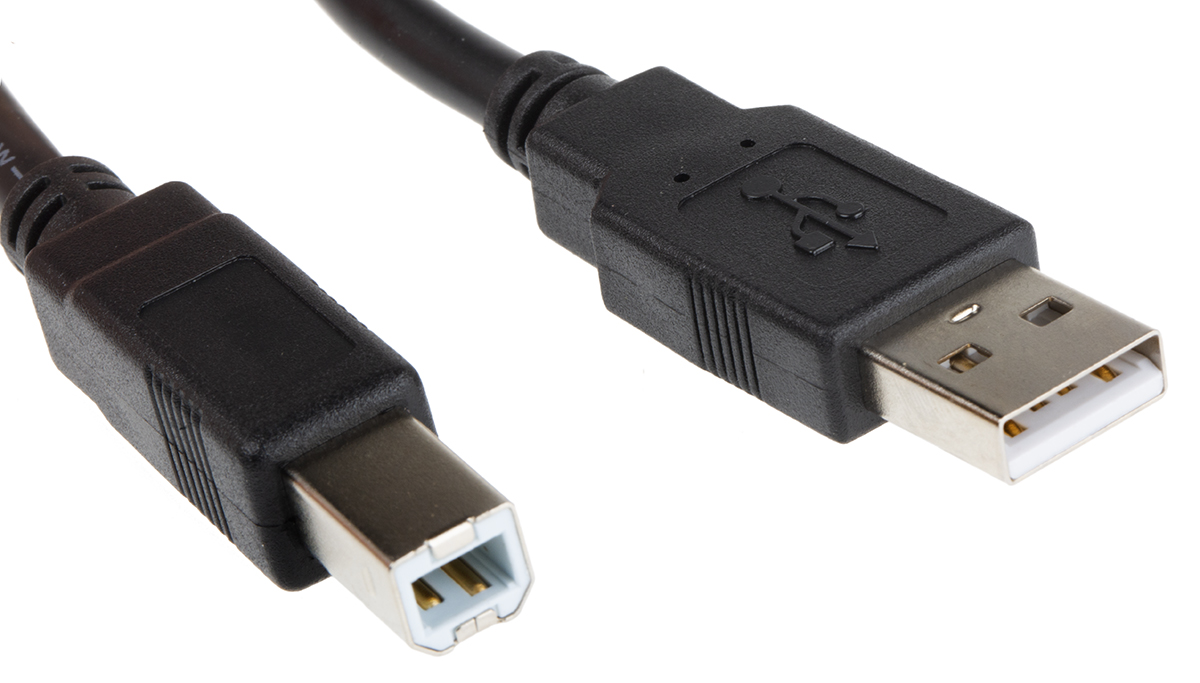
Form Factor and Materials: What Matters
Signal quality and durability largely depend on the form factor and build materials. A flexible cable with durable braiding and kink protection can last for years, even in tough environments. Some models feature ferrite cores to reduce electromagnetic interference — an important feature for studios and medical equipment.
Conductors — The Heart of Every Cable
The real quality lies inside. Premium conductors are made of pure copper, which ensures minimal resistance, a stable signal, and extended lifespan. Budget options may use copper-clad aluminum, which is suitable for less demanding tasks.
Extenders, Adapters, and Additional Solutions
Standard cable lengths are not always enough. In such cases, extension cables and active cables with signal repeaters come in handy. There is also a wide variety of adapters for conveniently connecting different types of devices. This is especially useful in studios, offices, and workshops where technology is frequently updated.
What USB Type-B Cable Options Are Available Today?
The modern range of USB Type-B cables includes both basic office solutions and advanced models for professional use. These include cables with enhanced shielding, flexible jackets, gold-plated connectors, and even water resistance. Available lengths range from 0.5 meters to over 10 meters to meet various needs.
Benefits of USB Type-B Cables
Why choose USB Type-B cables?
- Compatibility with thousands of devices;
- Stable data and power transmission;
- Secure connection with no wiggle or looseness;
- Long-lasting performance even with daily use;
- Flexible connectivity via adapters and extenders.
When it comes to stability, reliability, and performance, USB Type-B cables and adapters remain one of the top solutions. With a wide variety of USB types and versions, choosing the right cable depends on your needs — whether you're connecting a printer or working with audio equipment. Opt for quality, consider the standards, form factor, and conductor type, and you'll enjoy seamless connectivity without hassle.